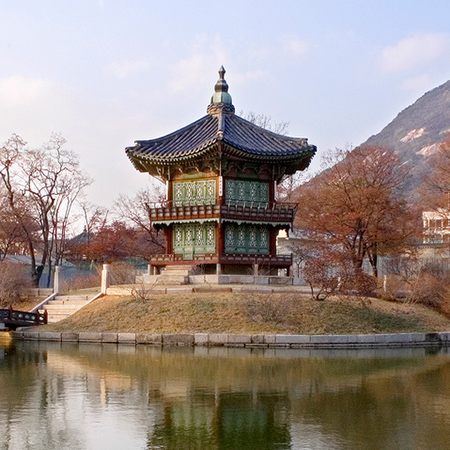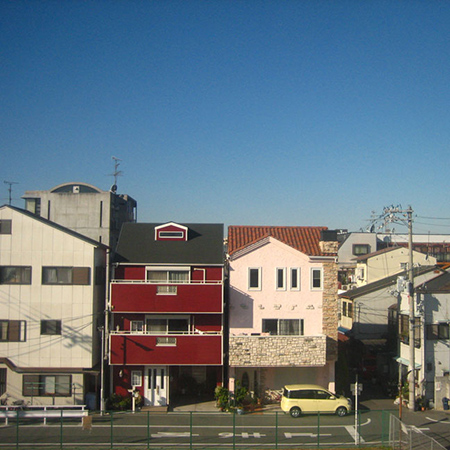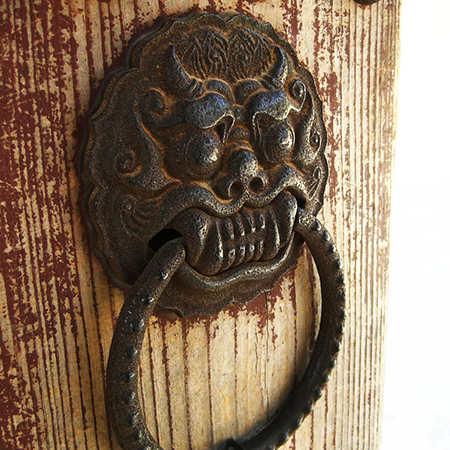
China, Japan, Korea: What's the difference? Do they all look the same, or are they very distinct? Is there any truth to the stereotype, or is it ignorance? Well, enter the exam room here and find out for yourself. We have eight tests in different categories such as face, art, architecture, and food. Remember: We are not here to make a statement; it's a question. Good luck and enjoy.

Why Do Americans Still Think MSG Is Bad for You?

posted by Dyske

MSG Crystals

MSG Crystals

Why do so many Americans, even very well-educated ones, still believe that MSG is bad for our health? It is an urban myth that it causes allergic reactions. Many studies from around the world have proven that MSG is no more harmful to our health than plain salt, yet the urban myth in the US continues. (Read Wikipedia entry on MSG ») In fact, in large quantities, salt is more harmful to our health than MSG is. When restaurants don’t use MSG, they just put more salt which is worse. I think it’s just because the name “monosodium glutamate” sounds too scary. If we called salt by its chemical name, I think the same thing would happen: “Would you like some sodium chloride on your French fries?”

Some people feel lethargic after eating Chinese food which lead to this myth called “Chinese Restaurant Syndrome”. I believe this has to do with the heaviness of the food. I feel the same way whenever I eat rich, heavy, greasy food. Cheap food in general tends to be so, specially cheap Chinese, Indian, and deep-fried food. If you were to stuff yourself with rich French food loaded with butter, cream, and cheese, the same would probably happen but because French food is generally expensive, we don’t stuff ourselves with it. And, that leads to another argument that enhancing the flavors with MSG would be good for us because we would feel more satisfied with less calories.

The main reason why the urban myth of “Chinese Restaurant Syndrome” spread so fast and wide, I believe, is xenophobia. Chinese food was a perfect candidate for it. MSG is strongly associated with Chinese food but it was actually invented in Japan, and the Japanese people probably consume more MSG than the Chinese.

MSG first went into production in 1909 in Japan, and since then, the Japanese people have been using it in just about everything. It’s nearly impossible to avoid MSG in Japan, or even in Japanese grocery stores in the US. You pick up any food product randomly and look at the list of ingredients, you will find MSG. For over a century, the entire nation of Japan has been consuming MSG every day. But, as it is commonly known, the Japanese are significantly healthier and live longer than Americans. So, what is there to be concerned about? More than one generation of people have already consumed it all their lives. Cutting down on sodium consumption is a common health concern even in Japan, but I’ve never heard anyone talking about cutting down on MSG.

It is true that using MSG in everything you cook is a form of cheating, but the same is true for salt and sugar. When you eat fruit, say strawberries or a grapefruit, you would want it to be naturally sweet, and not have to add sugar to it artificially. The same is true for savory food. You want to enjoy the natural amount of salt that’s in the ingredients, and if you get high-quality ingredients full of natural flavors, you wouldn’t need to add salt. We tend to add salt to food when flavor is lacking. High-end restaurants don’t usually have salt on the table, and asking for more salt is considered an insult. In that sense, yes, adding MSG is a form of cheating; we should enjoy the naturally occurring MSG if possible. But why single out MSG as a form of cheating? If MSG is cheating, then chefs should not add any salt or sugar in any of their food either, but they all habitually do. So, it’s hypocritical to single out use of MSG as cheating.

Chinese Noodle Soup

posted by Dyske

This is beef soup noodle ($5) from Lam Zhou Handmade Noodle & Dumpling at 144 East Broadway, New York, NY 10002.

I used to think Japanese ramen noodles were superior to the original Chinese versions, but now that I started tasting a variety of Chinese noodle soups, I think the Chinese ones are better. I think the Japanese put too many things into their broth. It’s too rich. It’s somewhat ironic that there is a “Ramen” fad in New York right now, popularized by the famous Korean-American chef, David Chang.

Yellow Trash Food

posted by Dyske

This is what I would call yellow trash food. It’s chicken and cheese over rice. It tastes amazing. I loved this. Check it out at Xo Kitchen, 148 Hester St, New York 10013, (Between Elizabeth St & Bowery)

Oldest Companies in the World

posted by Dyske

I was looking at my bottle of Kikkoman soy sauce, and noticed that it says, “Over 300 Years of Excellence.” “300 years” of anything is not something you see in any American products, so it stood out. I then became curious what the oldest company in the world is. In my mind, I was imagining European breweries. I Googled and found a Wikipedia page for List of oldest companies. To my surprise, Japan dominates that page. Japan has 3,146 firms that are over 200 years old. In comparison, the second place is Germany with 837 firms.

Nisiyama Onsen Keiunkan, Japan

Another thing that surprised me was that many of these old businesses are hotels. I would not think hotel business is easy to sustain for a long period of time as it is easily affected by the trends in tourism as well as by the ups and downs of economy.

The photo you see on the right is of the hotel in Japan which is officially recognized as “the oldest hotel in the world” by the Guinness Book of World Records. Well, according to Wikipedia, it is not just the oldest hotel but it is the oldest company in the whole world. I would say that is a big difference. It’s been in business since the year 705. That’s 1,307 years old. “300 years of excellence” sounds like a trifling matter.

Another thing you notice about this list of oldest companies is that there are only about a dozen countries listed. It makes sense; it’s hard enough for a country to survive for that long, let alone businesses. Political instability too is another big factor even if the country itself survived. China, for instance, wouldn’t be there because of their Communism years. Japan was basically like Galapagos Island.

Update on the Cove Situation

posted by Dyske

I received this email below about Sea Shepherd:

Hello,

Please forgive my English. I found your blog yesterday while searching articles regarding the Cove. I totally agree that this is an issue of ethnocentrism rather than protesting for whaling or for killing Dolphins. The issue has gotten an extreme now. Please see this:


This is nothing but hatred. The fact that the Academy has awarded the movie the Cove an Oscar has given them more confidence in what they are doing to people in Taiji. I want to spread this as much as possible and make people realize how wrong they are to the people in Taiji. The people in Taiji do not deserve this. The anti-Whaling, anti-killing Dolphin people need to find another organizations or ways to achieve their goals but not by supporting Sea Shepherd.

Do you think you could in anyway (in your blog or through twitter) to raise a voice about this?

Thank you,
Noriko
Tokyo, Japan

All Look Same in Office

posted by Dyske


Great execution and production. In my 20s, I worked on the trading floor of a British bank where there was another Asian guy named Sonny. A white guy named Steve used to call me Sonny and I just went along with it, and let him call me Sonny. One day, another trader who was sitting near him noticed and said, “Wait, did you just call him ‘Sonny’? That’s not Sonny, that’s Dyske.” He apologized profusedly but I thought it was pretty funny. At the Christmas party that year, the head trader got all the Asian men on the stage and asked Steve to point to Sonny. It was pretty funny.

How to Raise Asian-American Children

posted by Dyske

My Kid

My kid

The short answer is: I don’t really know. I don’t think anyone knows. So we need to make our best guesses, and that is what I would like to do below. Let me divide us Asian-American parents into two schools of thought. One school believes that we should teach our children whatever we know about our Asian heritage, which includes language, culture, values, customs, etc.. The other school believes that we should do our best to raise our children as Americans. Naturally, there are a lot of people who fall somewhere between the two extremes. Let’s call the first school, “bi-cultural school” and the latter “assimilation school”.

Statistically I’m not sure which school is more popular, but my own anecdotal evidence suggests that bi-cultural school is significantly more popular, at least among the first generation (immigrant) Japanese parents. My daughter attends a public school here in New York City and there are many Japanese parents. I’m one of the few parents who does not send their kids to Japanese schools on weekends, and I may be the only parent who does not teach Japanese to his child. Even my own parents are baffled by the fact that I do not. If my family was living in Japan, I would certainly teach my child English. The reason why I don’t teach my child Japanese has to do with the specific time in history and the context that my child will grow up in. Needless to say, I’m in the assimilation school.

Last week, New York Magazine published a thought-provoking article entitled “Paper Tigers – What happens to all the Asian-American overachievers when the test-taking ends?” The article meticulously analyzes what Asian-Americans experience in this country. The author, Wesley Yang, is a second generation Asian-American, and I do not believe he has a child. He writes from a point of view of a child and a victim. If he were a parent, he could not be so one-sided, since he would be partly responsible for what his children experience in the world. Although he covers a wide range of issues, parenting is left out.

Towards the end of the article, Yang reveals his own opinions of how Asian-Americans should behave in this country. He suggests that we behave more like the Americans. We shouldn’t be shy about getting (or demanding) what we want, but at the same time he suggests we should not do so by assimilating into the white-dominant culture, i.e., what white people find pleasant, comfortable, desirable, or appropriate.

Read the rest of this entry »